

Parish News: a new blog series exploring the parishes around Chippenham
Chippenham Museum collects and records not only stories about the town of Chippenham, but the 26 parishes that surround it as well. In this new blog series we will be sharing objects and stories from our collection that reveal a little of the history of each parish. We are starting with the parish of Biddestone, which includes the village of the same name and the nearby hamlet of Slaughterford.

Price list, Slaughterford Ales, 1900s
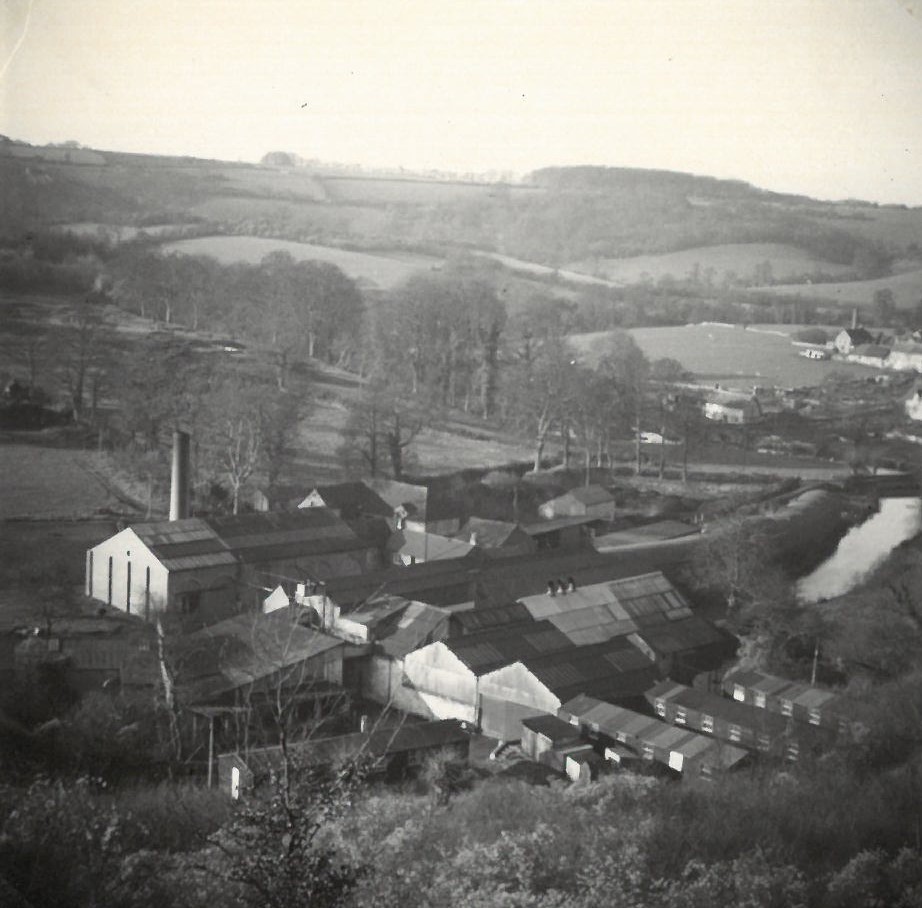
It may be a surprise to some that Slaughterford was for centuries a hub of industrial activity, with a brewery and two papermills. In the 18th and 19th centuries, papermaking developed in several villages in the By Brook Valley due to the ready supply of water from its river, which was needed for both the manufacturing process and to power the machinery. Nearby Bath and Bristol also provided ready markets for the paper products they made.

Photograph of Dowding’s Paper Mill, Slaughterford, by Michael Woodman, 1950s
As well as two paper mills, Slaughterford also had a Rag Mill. Here rags were cut up and boiled to break them down into individual fibres, which were then made into paper in the nearby mills. Glimpses of its industrial past can still be found in the village and some of the former mill buildings have been transformed into artist’s studios, including that of Anna Gillespie, who until recently was based in one of these buildings.

Still:There, plaster and mixed media, by Anna Gillespie, 2010s
The origins of the name of Slaughterford are not as violent as it appears. The name is thought to derive from sloe thorn, or blackthorn, meaning the ford near the blackthorn trees. Biddestone is thought to have Saxon origins and derive from Bede’s settlement. Biddestone appears in the Domesday book of 1086, where it is listed as having 4 households, with around 20 people living in the village. Its main resources were woodland and meadows.

Postcard of Biddestone Duck Pond, 1930s
Like many nearby villages, Biddestone once had its own school, which opened in 1844 only closing in 1998 due to falling pupil numbers. The village also had a number of churches and chapels. As well as St. Nicholas that still stands today, another church dedicated to St. Peter also stood in the village and was demolished in 1846. In keeping with the tradition of non-conformist groups in the area, a Methodist Chapel and a Baptist Chapel once stood in Biddestone, and a Quaker meeting house could be found in Slaughterford.
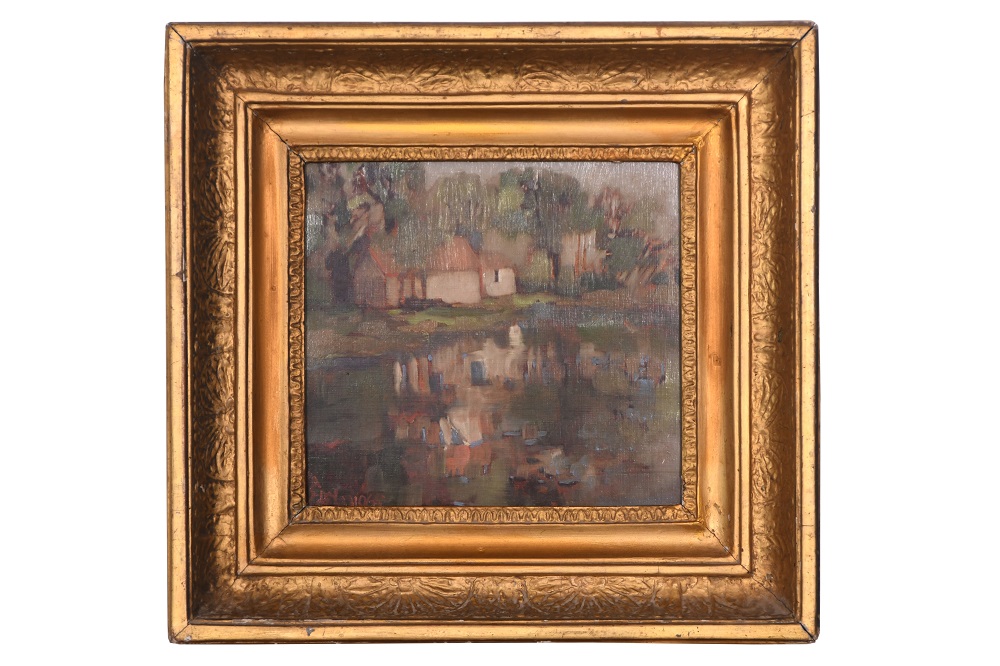
Landscape (possibly Biddestone), oil on board, by Richard Ewen, 1970s
Both settlements lie just within the Cotswolds Area of Outstanding Natural Beauty. The picturesque appearance of Biddestone, with its famous duck pond, has made it popular with artists, including Richard Ewen who lived there for over 40 years, and with film crews, most recently as the setting for Sky’s Agatha Raisin detective series.


Chippenham Town Council
Official Chippenham Town Council Facebook
Monitored: Mon-Thu: 9am - 5pm, Fri 9am - 4:30pm

📻 We're delighted that our exhibition, "Wiltshire & the World: John Aubrey and the Quest for Knowledge", is being featured on the Ben Prater Morning Show on BBC Wiltshire all this week.
Tune in to hear historian Louise Ryland-Epton explore the remarkable life and achievements of John Aubrey, one of Wiltshire's most fascinating historical figures, 400 years after his birth in Easton Piercy. Today's link ⬇️
www.bbc.co.uk/sounds/play/m003014q (At 1.48.43)
Why not make time to visit the exhibition and discover Aubrey's extraordinary quest for knowledge for yourself?
📍 Open daily, 10.00am – 4.00pm
🎟️ FREE entry
🚪 Closed Sundays
We look forward to welcoming you!
📷 Jack Owen Ice House Design / Bath
Chippenham Town Council Wiltshire History Chippenham - Our History One Chippenham Chippenham Local History Friends of Chippenham Museum
#JohnAubrey #WiltshireHistory #MuseumExhibition #BBCWiltshire #Heritage #WiltshireAndTheWorld
We have reduced our carbon emissions from our activities and services by 28.7% since 2019, according to our latest appraisal, covering 2024–2025.
Since we began measuring our emissions, we have made a number of changes to reduce our impact on the environment. These include replacing the LPG heating at Stanley Park with a heat pump and solar panels, switching to renewable energy suppliers, installing more energy-efficient heating and lighting, improving insulation in our buildings, and beginning the transition to electric vehicles and HVO fuel.
These measures form part of our Climate Action Plan, which sets out how we will achieve our commitment to become a net carbon zero organisation by 2030.
There is more work to do. Our next assessment will include further reductions from replacing gas heating at the Town Hall and Neeld Community & Arts Centre with heat pumps, helping us to remove fossil fuel heating from our buildings.
We will continue to look for practical ways to reduce our carbon emissions and make our services and buildings more sustainable.
To celebrate Swindon & Wiltshire Pride, we are flying the progress flag from the Town Hall.
For information on what celebrations are taking place this weekend, please visit
Swindon & Wiltshire Pride 2026 - 15 August 2026
www.swindonwiltshirepride.org.uk
Find out more about this years event on our website!