

Collections & The Climate Crisis: Art & The Environment
Being inundated with scientific statistics and news reports about climate change can be overwhelming and difficult to comprehend. In this blog we look at how artworks in our collection show responses to our changing environment, and how this may provide a different way for people to understand the climate crisis.
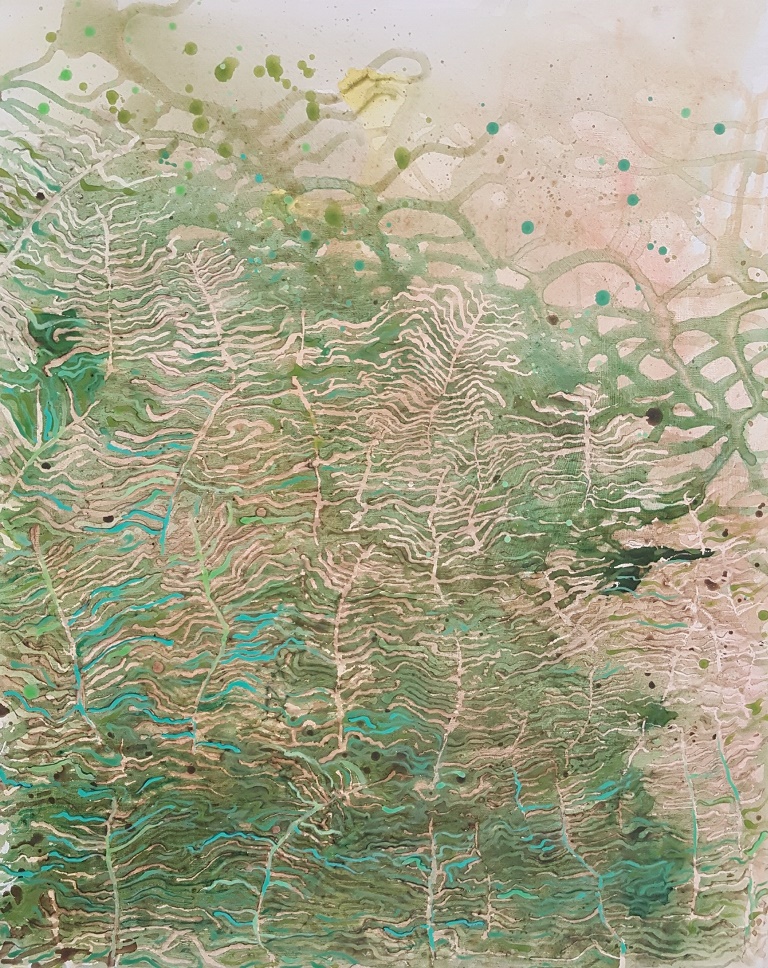
Never Ceasing, 2019, Rachel Heard, © The Artist
Corsham based artist Rachel Heard uses her artwork to draw attention to our relationship with the environment, especially the impact we have on the world around us. Her work Never Ceasing, appears abstract, but Heard has manipulated the movement of the paint to reveal a hidden landscape beneath the surface of the bark. The patterns are inspired by the marks left by bark beetle larvae. Bark beetles usually play an important role in the life cycle of forests, but climate change has turned them into an invasive pest.
Rising temperatures have caused bark beetle numbers to increase greatly, at the same time as weakening the trees they feed on. Bark beetles have wiped out millions of acres of forest in North America and Europe and can now be found in Southern England. The loss of these forests in turn contributes towards the climate crisis.
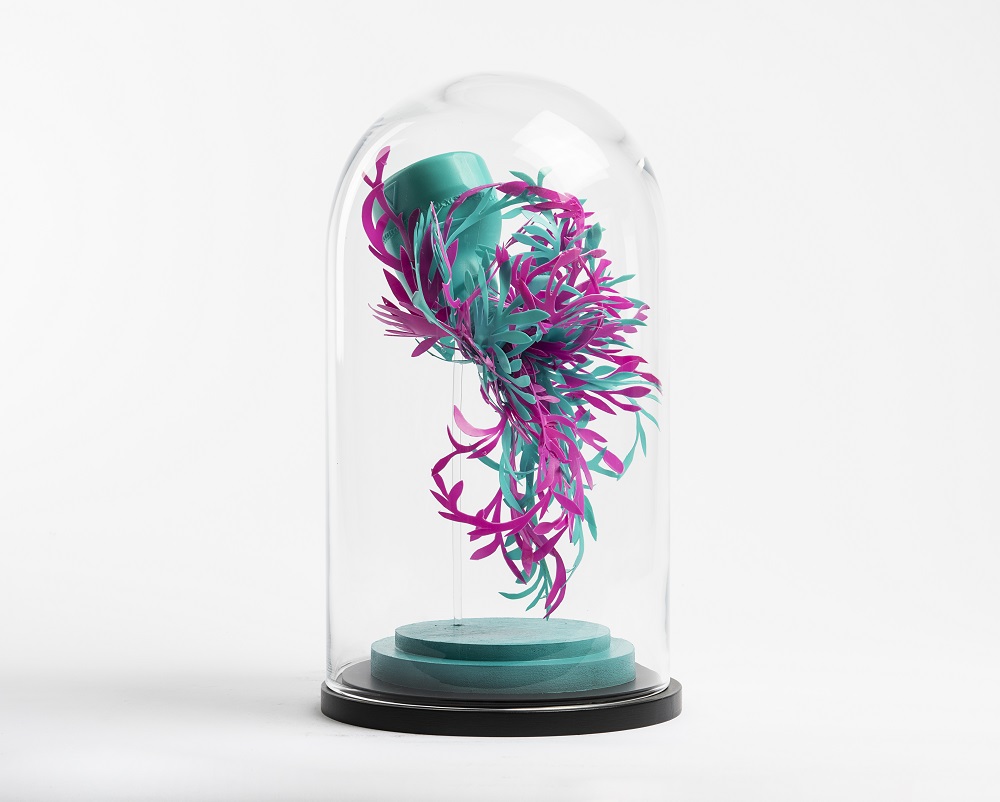
Future Fossil #3, 2021, Anya Beaumont, © The Artist, Image-John Taylor
Local artist Anya Beaumont creates sculptures from a range of materials. In response to the climate crisis she has increasingly been working with recycled papers and single-use plastics.
This work is from Beaumont’s latest series Future Fossils. Through it she is exploring ideas around the legacy of the age we live in. In the same way that the Stone Age and Iron Age are named for the materials most found during archaeological excavations of these periods, in the future it is likely that the time we currently live in will be known as the Plastic Age.
Beaumont plays on the idea of what our equivalent of fossils will be, using plastics to create forms reminiscent of the sea creatures found in the prehistoric oceans that once covered Wiltshire. By mounting it and placing it under a glass dome as if it were a precious specimen, she is playing with how future generations may interpret the things we leave behind today.
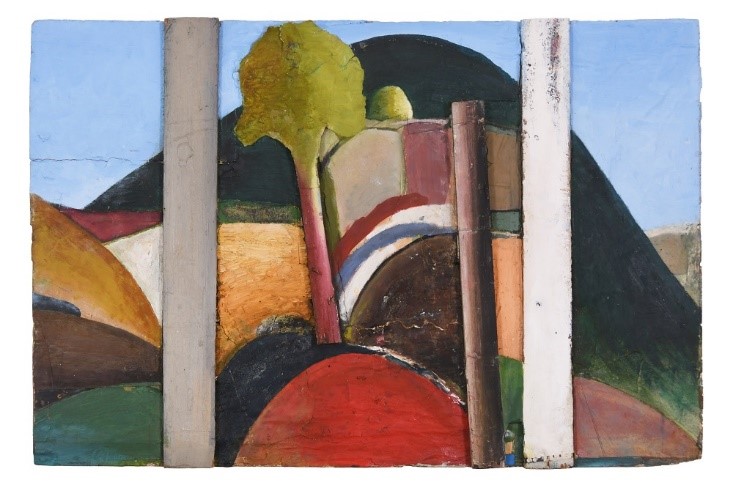
Wiltshire Landscape, 1972, Michael Monk, © The Artist
To create Wiltshire Landscape Michael Monk has also used found objects, such as a crate lid, scavenged from the same landscape he has depicted.
Other artists in our collection portray less traditional landscapes, to say something about the world around us and most importantly about our relationship to the land. Edward Curtis and Peter Berry have both drawn inspiration from post-industrial landscapes, spaces showing the impact of abandoned and obsolete heavy industries associated with the extraction of fossil fuels.
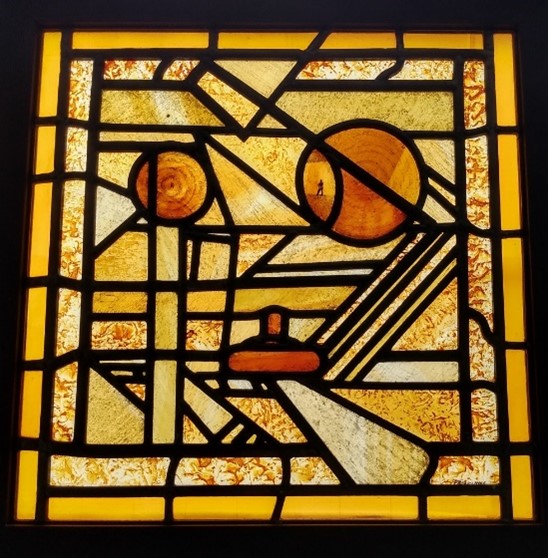
Rust and the Man, 2020, Peter Berry, © The Artist
In his glass panel, Rust and the Man, Berry shows a tiny figure among the towering remains of obsolete oil rigs, once used to extract large quantities of fossil fuels from the earth. The size of the figure is at odds with the impact people have had on the environment. Curtis’ lidded container raises questions about how we should view these post-industrial landscapes, in this case one created by pollution from coal mines.
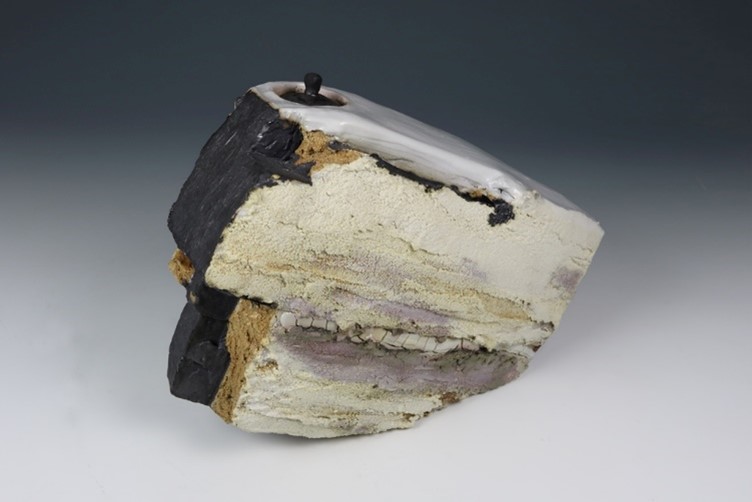
Lidded container, Edward Curtis, © The Artist
Through their work artists can help us focus on local or specific issues associated with climate change, that may get lost or overlooked in the overwhelming global scale of the environmental crisis.


Chippenham Town Council
(opens in a new tab)Official Chippenham Town Council Facebook
Monitored: Mon-Thu: 9am - 5pm, Fri 9am - 4:30pm
The cast of Beauty and the Beast, the professional pantomime at the Neeld Community & Arts Centre this December, are coming to Chippenham on Friday 23 October.
They will be at the Pumpkin Patch at 10am, and visiting a few more locations during the day. Read more below.

You searched for Beauty and the Beast – The Neeld, Chippenham
bit.ly
The Neeld Community and Arts Centre and Polka Dot Pantomimes presents… Professional pantomime arrives at The Neeld, Chippenham this Christmas as we welcome award winning Polka Dot Pantomimes to pres...
Trees play an important role in our town, from improving air quality to providing shade and supporting wildlife.
The Arboricultural Officer in the Environmental Services Team explains how recent weather conditions are affecting trees in Chippenham and the measures being taken to strengthen their resilience.
Read the news post here - bit.ly/Trees_Weather