

Surface/Vessel: Insights into the Modern and Contemporary Art Collection
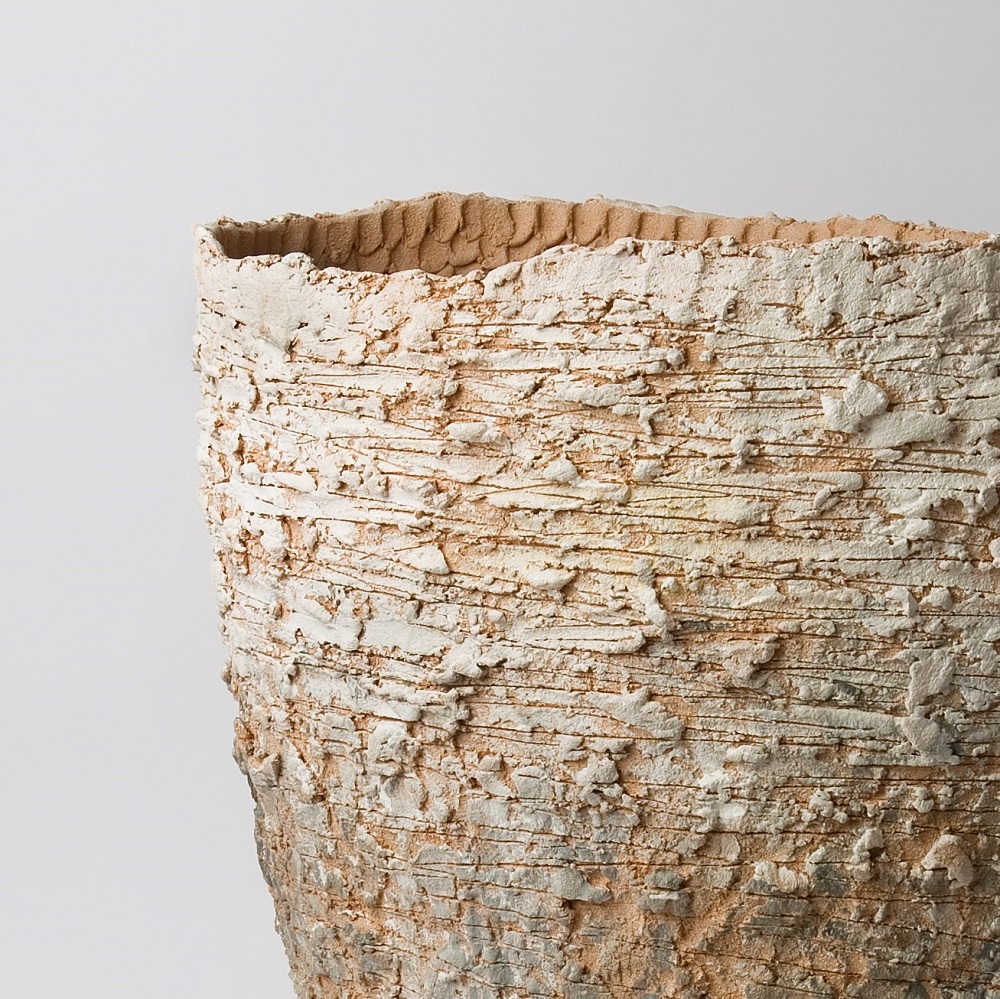
Earlier this year, the Barbican in London hosted the exhibition Postwar Modern: New Art in Britain 1945-1965 (you can find out more about it here ), which included a room with the title Surface/Vessel. Here the paintings of William Scott were paired with ceramics by Lucie Rie and Hans Coper, exploring how:
‘In contrast to the angst that dominated art-making in the early postwar years, works of the later 1950s and early 1960s often conveyed a dreamlike sensuality and tactility, their serenity offering refuge and comfort in a world still at sea.’
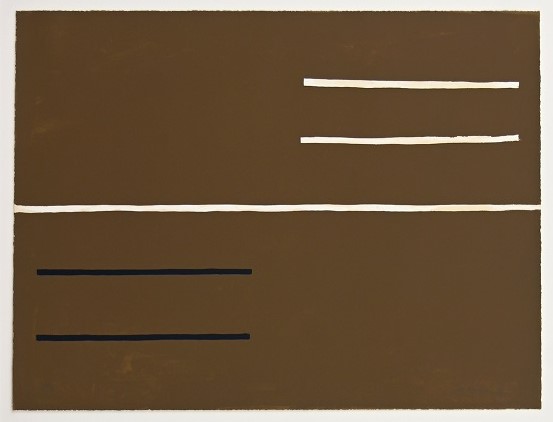
Equals, William Scott, © Estate of William Scott
Thanks to the Golder-Thompson Gift it has recently acquired prints by William Scott. In 1947 William Scott commented ‘I find beauty in plainness’, a statement clearly demonstrated by his meditative print Equals.
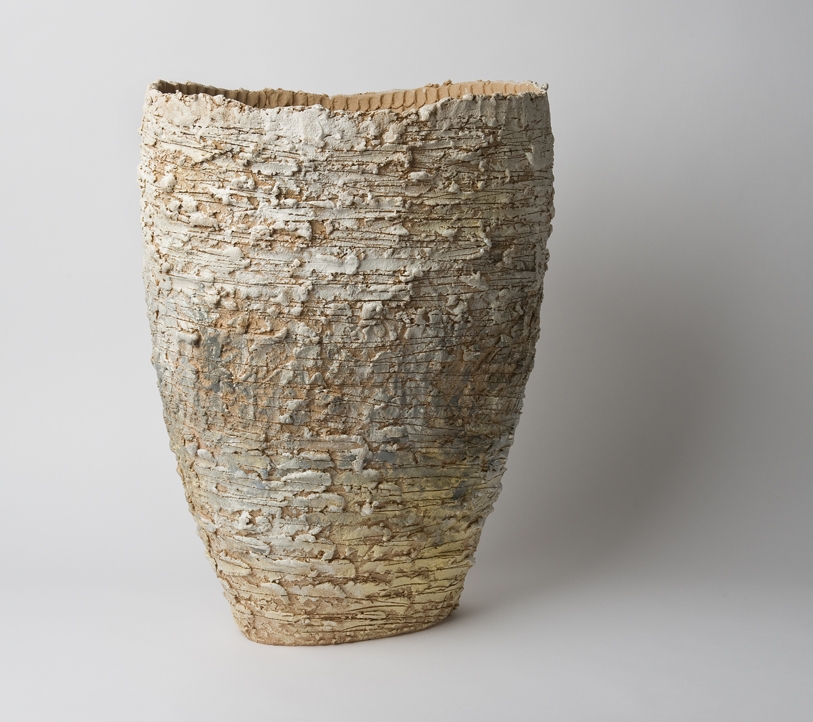
Primal, Sarah Purvey © the Artist
While Chippenham Museum doesn’t have ceramics by Coper and Rie in its collection, it does hold many works by other modern and contemporary artists where, as the Barbican describes, ‘colour recedes and textured surfaces and irregular forms take centre stage’. This includes the work of Sarah Purvey, whose use of a restricted colour palette, seen here in her work Primal, show the ability of expressive mark-making to produce thought-provoking works, that are filled with emotion.

Pebble Pots, Robert Fournier, Image: © Chippenham Museum
Works by other ceramicists such as Margaret Curtis, Jane Wheeler and Robert Fournier, also use the natural texture of clay and the controlled yet seemingly spontaneous application of glazes to produce sculptural, organic works.
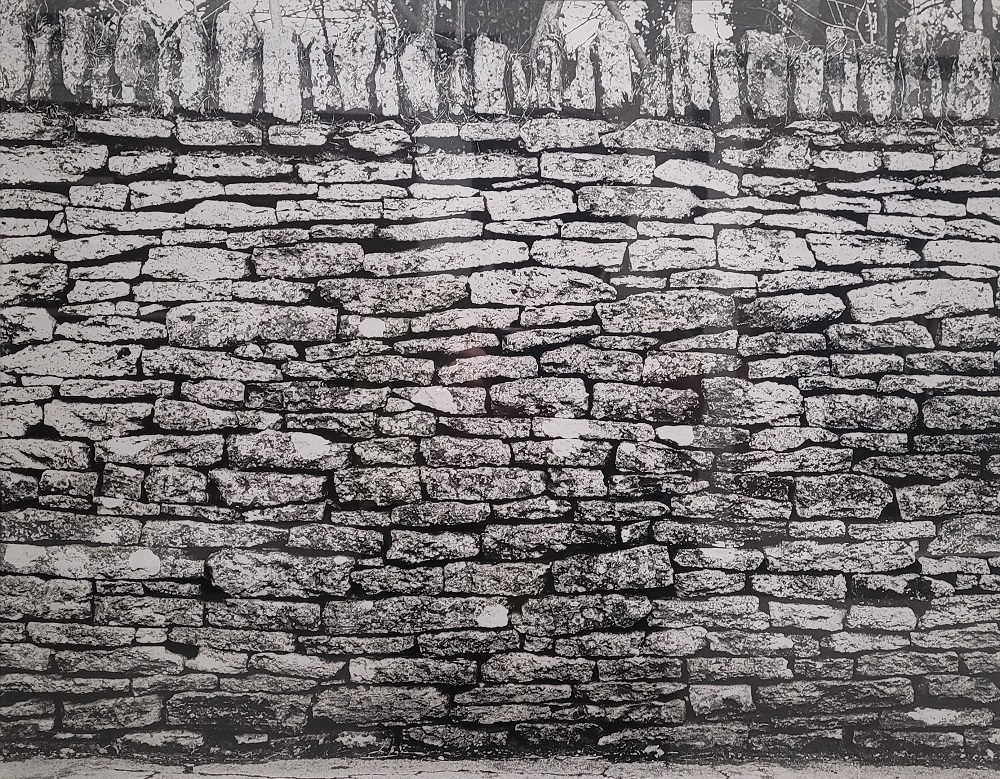
untitled, Penelope Ellis, Image: © Chippenham Museum
Despite the inherent flatness of the medium, photographers, such as Penelope Ellis, have also explored similar themes, here using black & white photography to focus on pattern and texture, creating images that become almost abstract in nature.


Chippenham Town Council
(opens in a new tab)Official Chippenham Town Council Facebook
Monitored: Mon-Thu: 9am - 5pm, Fri 9am - 4:30pm

We are pleased to share that Chippenham has successfully achieved Purple Flag re-accreditation for the tenth consecutive year.
Awarded by the Association of Town and City Management, Purple Flag is an internationally recognised accreditation that celebrates town and city centres offering a safe, vibrant and diverse evening and night-time economy between 5pm and 5am.
This achievement reflects our commitment to working collaboratively with partners to create a dynamic, safe, and vibrant evening and night-time economy. Assessors highlighted our effective multi-agency working, and recognised Chippenham as an attractive destination that makes excellent use of its heritage assets with ambitious plans for the future development of the riverside.
With fewer than 100 Purple Flag destinations worldwide, we are proud that Chippenham continues to be recognised as a place where people can enjoy a high-quality, safe and thriving evening experience.
For more information, please visit bit.ly/PurpleFlag_10
Trees and hedges are among the most reported issues in Chippenham. We are lucky to have an Arboricultural Officer in the Environmental Services Team who cares for our urban forest.
To find out how this is cared for, how we maintain hedges and shrubs, and how to report any concerns, please visit this link - bit.ly/Tree_care