

Collections & The Climate Crisis: Single-Use Plastic
The explosion of single-use plastics has caused a range of environmental issues, from the carbon emissions caused in extracting crude oil and natural gas to produce plastics, to the amount of unbiodegradable plastic waste ending up in landfill and in our oceans. Given the increased awareness of the damage plastics are causing, can the plastic alternatives of the past give us ways to tackle our current climate issues.
Before modern supermarkets, people would visit their local butchers and greengrocers to do their shopping. Here goods would not be individually packaged, instead you would buy just the quantity you needed, which would be handed over loose or wrapped in paper to take home in your own shopping bag or basket.
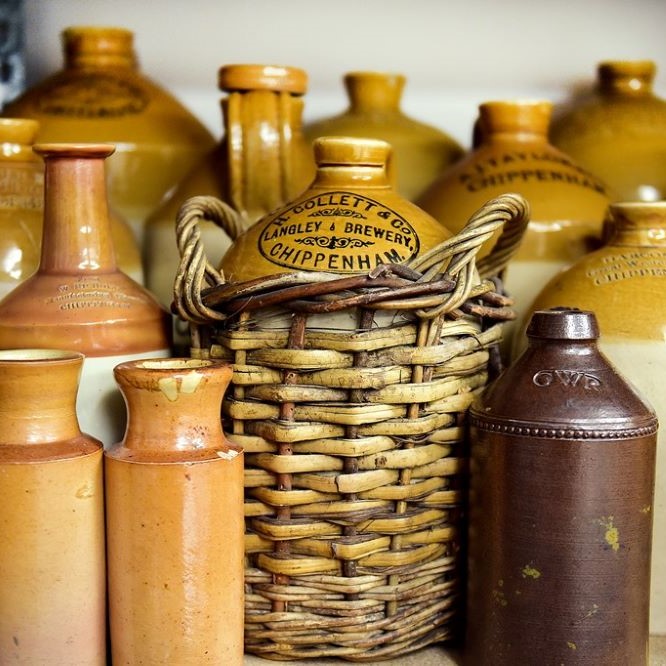
Before the invention of plastics, ceramics and glass were the commonest materials used for storing liquids. Many different examples can be found within our collection at the museum, relating to various businesses in Chippenham. Nearly all of them were designed to be used multiple times, with customers encouraged to either return the bottle for money, known as a deposit return scheme, or simply to refill with their new order.
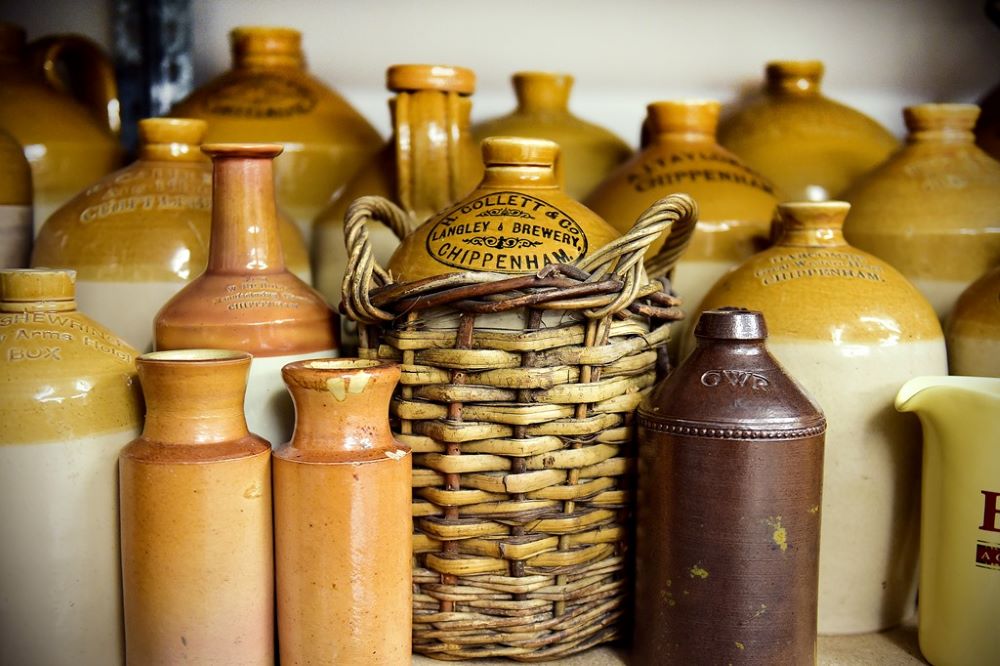
Stoneware bottles from Chippenham businesses, Chippenham Museum
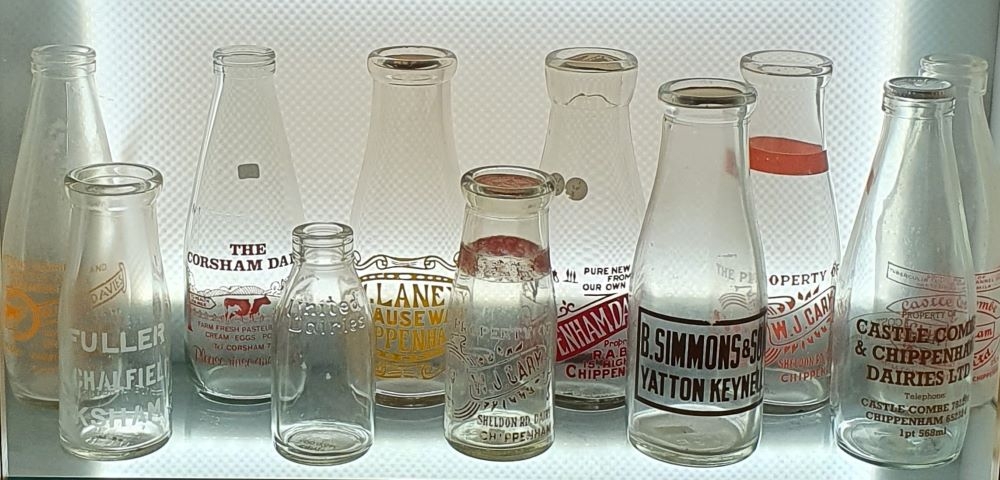
Milk bottles from Chippenham businesses, Chippenham Museum
The development of plastics in the early 20th century provided a new material which was hardwearing but easy to shape. Plastic quickly became the material of choice for a huge range of items including shopping bags, cheap packaging for food and bottles for drinks.
Today, with increased awareness of the environmental impact of single-use plastics, companies are returning to packaging made from recyclable and more sustainable materials like paper. Similarly, with people in the UK going through 14 billion plastic drinks bottles a year, recent attempts have also been made to discourage our reliance on single-use plastic bottles and move towards reusable alternatives.
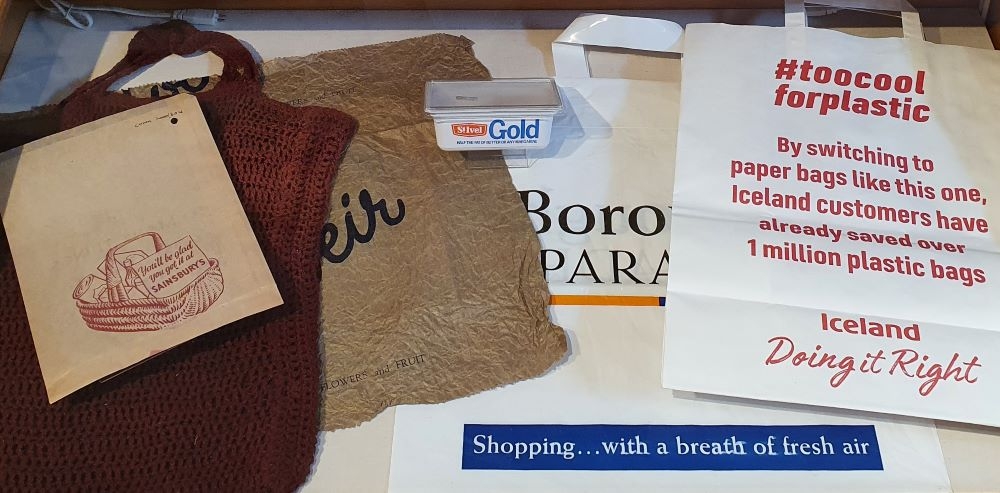
Packaging and shopping bags showing a transition from paper to plastic and back again, Chippenham Museum
In some ways what we are seeing now is a return to the packaging options of the past. Today, refill shops, where customers bring their own containers or packaging to restock on food items and toiletries, are becoming more popular. These shops also allow people to just buy what they need, reducing food waste as well as packaging waste. In 2019 the UK Government agreed to introduce a new Deposit Return Scheme (or DRS) for drinks containers, a scheme which as we can see from the bottles in our collection had existed centuries prior.
However, as demand for environmentally friendly options has increased, concern around ‘greenwashing’ has emerged. Greenwashing is where companies give a misleading impression of their products and services, making them appear more environmentally friendly than they are. It can be challenging for eco-conscious consumers to make the most environmentally friendly choices.
Although the packaging of the past was largely a result of the availability and affordability of materials, rather than due to environmental concerns, there are still a number of ideas we can harness today in our search to be more environmentally friendly.
What can the past teach us about tackling today’s climate issues?


Chippenham Town Council
(opens in a new tab)Official Chippenham Town Council Facebook
Monitored: Mon-Thu: 9am - 5pm, Fri 9am - 4:30pm
Due to the yellow weather warning by the Met Office, and to ensure the comfort and safety of all traders and shoppers, the decision has been made to cancel the market on Friday 23 October.
At present, Saturday’s market will go ahead as planned. We will continue to monitor the forecasted weather and update you again if this changes.

We really do not want people to be choosing their pumpkins in the wind and rain, due to the yellow weather warning issued by the Met Office. To ensure this event can be enjoyed as much as possible, we have made the decision to reschedule the Pumpkin Patch event until Tuesday 27 October at 10am.
If you were hoping to meet the Beauty and the Beast Pantomime Cast, you can still see them in the High Street between 10am - 11am, REEL Cinema Chippenham 11pm - 12pm, Chippenham Library 1pm - 2pm and Chippenham Museum 2pm - 3pm.
The footpath that runs adjacent to John Coles Park, between King Alfred Street and Hungerford Road, remains closed allow essential wall repairs to take place.
Wiltshire Council have advised the works are currently expected to be completed by 31 October 2026, although the closure may be extended if necessary.
A signed diversion route is in place via King Alfred Street, Hardenhuish Avenue, Marshfield Road, Park Terrace and Park Fields.
For further information about the closure or the works, please contact Wiltshire Council on 0300 456 0100 or visit one.network/public