

Collections & The Climate Crisis: Fast Fashion
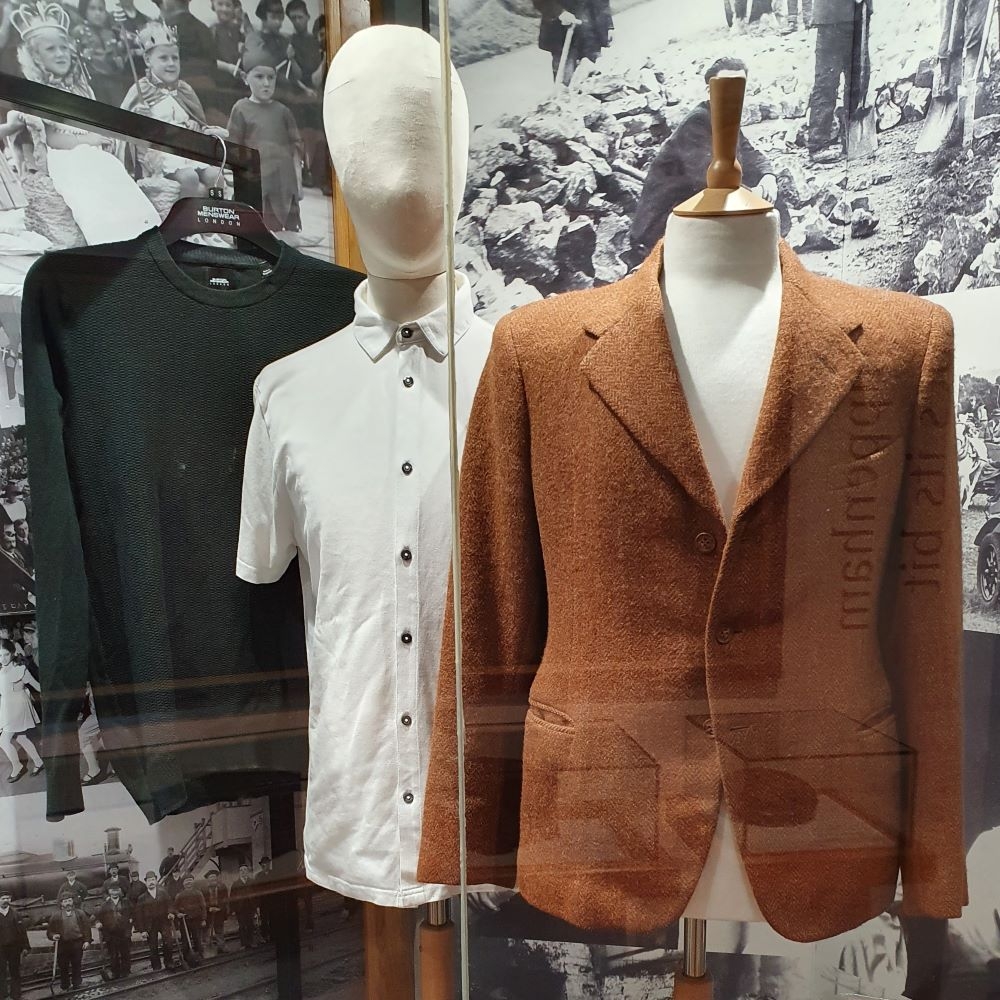
From ‘made to measure’ to ‘made in Bangladesh’ – In our latest blog we discover what a Burton’s jacket, shirt and jumper from our collection can reveal about the damaging impact of fast fashion on our environment and society today.
Burton opened a store in Chippenham in 1937, with the goal of providing affordable, well-made menswear. Customers could choose their suit from a small selection, which would be tailor made in the UK, often using British-made fabrics such as a Harris tweed suit from our collection. Although Burton branded itself on its affordability, and this was a large part of its appeal, these suits were still an expensive purchase for the average man. As a result, they would have been taken care of and worn for many years.

Burton’s Harris tweed jacket, 1930s, Chippenham Museum
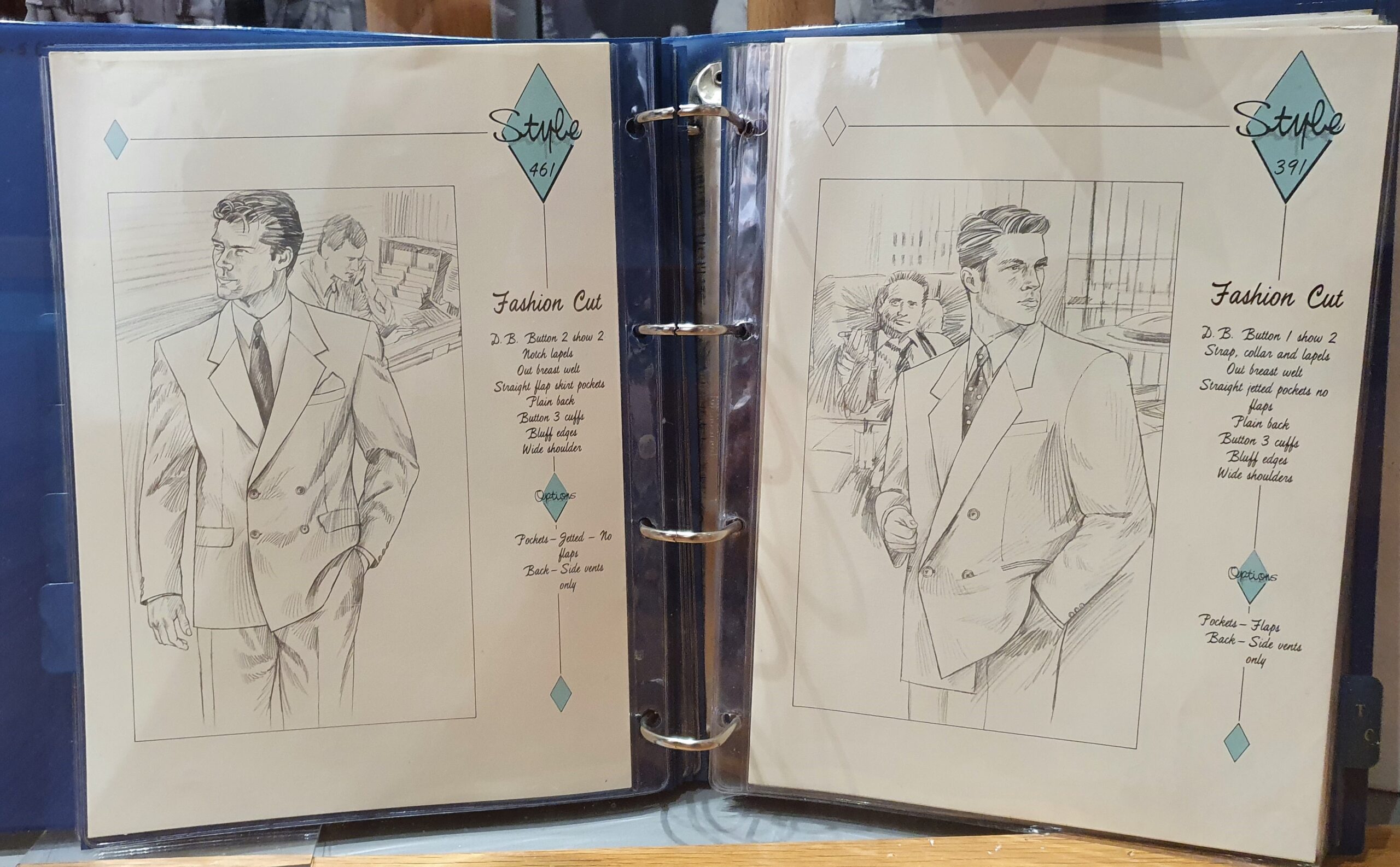
Burton’s made-to-measure catalogue, 1980s, Chippenham Museum
Over time Burton, like many clothing retailers, moved away from tailor-made clothing, produced in the UK, to mass produced garments made overseas, where labour costs are lower. The shirts and jumper in our collection were made in Bangladesh and Taiwan. This coincided with the development of cheaper, synthetic fabrics such as polyester, nylon and acrylic.
More recently the demand for rapidly changing, trend-led clothing, largely sold through online retailers, has led to an explosion of cheap disposable ‘fast fashion’. As its name suggests, the clothes are made as quickly and cheaply as possible resulting in poorer quality, less durable items of clothing. Burton itself was purchased by the online retailer Boohoo in 2021 leading to the closure of all its high street stores.
But what is the environmental impact of this shift to fast fashion production?
Like plastic, synthetic materials such as polyester, nylon and acrylic are manufactured from fossils fuels such as crude oil and natural gas. While seen as being cheaper and more hardwearing, every time clothes made from synthetic fibres are washed it releases large amounts of microplastics ultimately ending up in our drinking water and polluting the oceans.
Even clothing made from natural materials can have a negative environmental impact. Cotton plants require large quantities of harmful insecticides and pesticides to produce, as well as huge amounts of water to both grow and process, even before the clothing is manufactured. A single pair of jeans requires up to 10,000 litres of water to produce.
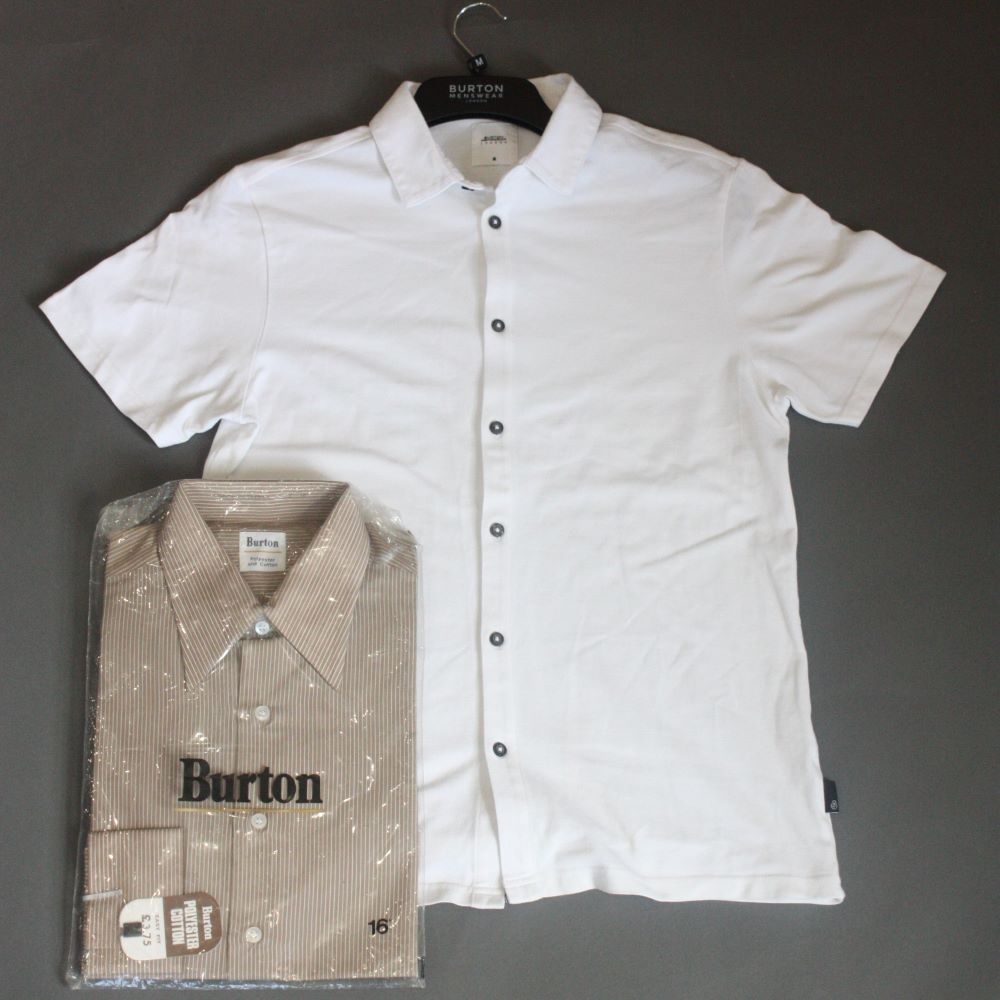
Burton’s cotton shirts, made in Taiwan and Bangladesh, Chippenham Museum
The fashion industry employs around 300 million people around the world. Many of them live in the poorest countries where labour is cheap and relaxed labour laws mean conditions in factories are poor. To fulfil the demand for fast fashion many workers are exposed to long hours and harmful chemicals within dangerous buildings. In Bangladesh in 2013, over 1000 garment workers were killed when a clothing factory used by many western brands collapsed.
The amount of clothing produced has rapidly increased. Lower prices, poorer quality and fast changing trends mean clothes are often only worn a handful of times. Large quantities of clothing also go unsold, as fashion is no longer made to order. It is estimated that the fashion industry produces 92 million tonnes of textile waste each year, most of which ends up in landfill.
How can we slow down fast fashion?


Chippenham Town Council
(opens in a new tab)Official Chippenham Town Council Facebook
Monitored: Mon-Thu: 9am - 5pm, Fri 9am - 4:30pm
Due to the yellow weather warning by the Met Office, and to ensure the comfort and safety of all traders and shoppers, the decision has been made to cancel the market on Friday 23 October.
At present, Saturday’s market will go ahead as planned. We will continue to monitor the forecasted weather and update you again if this changes.

We really do not want people to be choosing their pumpkins in the wind and rain, due to the yellow weather warning issued by the Met Office. To ensure this event can be enjoyed as much as possible, we have made the decision to reschedule the Pumpkin Patch event until Tuesday 27 October at 10am.
If you were hoping to meet the Beauty and the Beast Pantomime Cast, you can still see them in the High Street between 10am - 11am, REEL Cinema Chippenham 11pm - 12pm, Chippenham Library 1pm - 2pm and Chippenham Museum 2pm - 3pm.
The footpath that runs adjacent to John Coles Park, between King Alfred Street and Hungerford Road, remains closed allow essential wall repairs to take place.
Wiltshire Council have advised the works are currently expected to be completed by 31 October 2026, although the closure may be extended if necessary.
A signed diversion route is in place via King Alfred Street, Hardenhuish Avenue, Marshfield Road, Park Terrace and Park Fields.
For further information about the closure or the works, please contact Wiltshire Council on 0300 456 0100 or visit one.network/public