

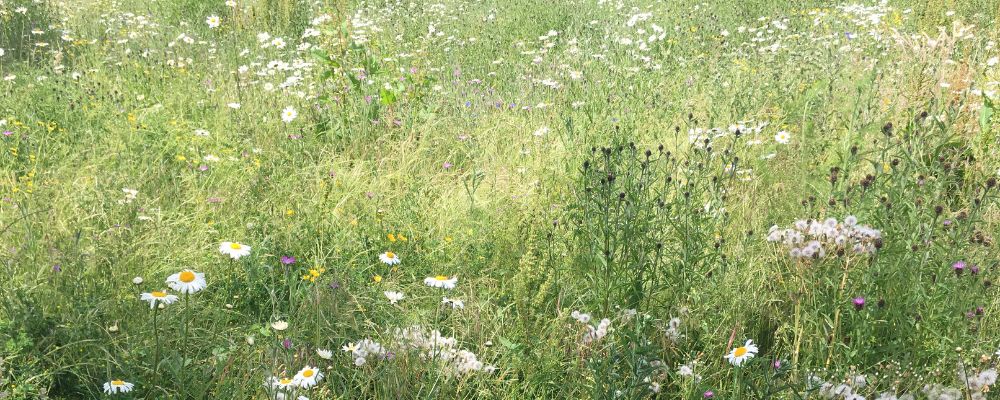
Wildlife areas in Chippenham
Our wildlife is in trouble. Since the 1950s habitat loss, pesticides, intensive agriculture, pollution and climate change have all decimated our nation’s wildlife. Currently 26% of all UK mammals are at risk of extinction, including hedgehogs. Nearly half of all our birds and insects are in decline including pollinators like bees and butterflies that we rely on to grow our food.
In 2021 Chippenham Town Council declared an Ecological Emergency. Along with the Tree Planting Strategy which will double the number of trees on Council owned land and the Town Council’s free residential tree giveaway, specific areas have been identified which the Town Council will carefully manage and maintain to benefit wildlife. These areas will be mown less frequently, and the grass cuttings will be removed where practicable.
How can wildlife areas help?
We’ve lost about 98% of our wildflower meadows and without space to grow 1 in 5 of our native British wildflowers are at risk of extinction. Typically, a meadow can contain over 700 types of native meadow plants and wildflowers which provide food and shelter for nearly 1,400 species of bees, pollinators and other insects. Butterflies in particular need specific host plants to survive such as Bird’s-foot-trefoil which is the main food plant for Common Blue and Silver-studded Blue caterpillars. The insects in turn provide food for birds, bats and other small mammals helping them to thrive and increase our local biodiversity.
Areas for wildflowers and longer grass create sources of food and undisturbed habitat for our local wildlife. They also help fight climate change. All plants capture carbon but some are more efficient than others. Trees and hedgerows are able to store more carbon in their leaves and trunk. However, if the wood is burnt or decays the carbon is released back into the atmosphere. Wildflowers and long grasses absorb carbon out of the air and lock it away into their roots and the soil. Research has shown that grasslands and meadows can store up to 3 tonnes of carbon per year, per hectare.
In addition to their other benefits, wildflowers are much more resilient to extreme weather like long, hot summers or flooding and can help prevent soil erosion with their deep roots. They will also provide colour and beauty to enhance our green spaces and well-being.
Managing wildlife areas
Wildflowers need careful management to create the right conditions for them to grow and become established. When grass cuttings are left to rot down, this feeds the soil and makes the grass grow vigorously crowding out any flowers. If grass is simply left uncut, this results in tall, thick, coarse grass and not much space for anything else.
Wildflowers need low-nutrient soil to grow. When the grass cuttings are removed, this lowers the fertility of the soil. If mowing is reduced to once or twice a year this gives the flowers time to grow, blossom and drop their seeds. Over time as the grass cuttings continue to be collected, the grass becomes shorter and finer creating more space for wildflowers to bloom.
Wildflowers may start to grow in the first year or it may take a year or two longer for them to become established – it all depends on the condition of the soil.
Where are the wildlife areas?
To view the map showing all of the locations of wildlife areas, please click on the following link – Wildlife Areas.


Chippenham Town Council
7 Likes
Official Chippenham Town Council Facebook
Monitored: Mon-Thu: 9am - 5pm, Fri 9am - 4:30pm

You may see our Environmental Services team cutting back hedges and shrubs in the next few months, as part of their duties.
Hedge and shrub maintenance ordinarily takes place between 1st August and 28th February, in line with the bird nesting season. Hedges and shrubs are generally cut once annually during the Autumn/Winter maintenance programme, in accordance with the character of the area and to ensure the safe use of the town’s roads, pavements, parks, open spaces and residential properties.
Hedges are one of the most common issues reported to us. If you have a concern about a hedge or shrub that requires maintenance, please use our Report It system to inform us and we will ascertain ownership and take action where required - bit.ly/ReportIt_
11 hours ago
Trees are more than part of our landscape, they often become part of our memories. Perhaps it's the tree you pass on your daily walk, one that provides welcome shade on a sunny day, or one that reminds you of a special moment.
Which tree in Chippenham means the most to you?
Tomorrow is the final day to nominate your favourite tree. Everyone who submits a nomination will be entered into a prize draw for the chance to win a £100 garden centre voucher.
The tree must be located within the Chippenham parish boundary and visible from a public space.
Find out more by visiting bit.ly/CTCFavourite_Tree and submit your nomination here - bit.ly/CTCFavouriteTree_Survey
3 days ago