


The Buttercross
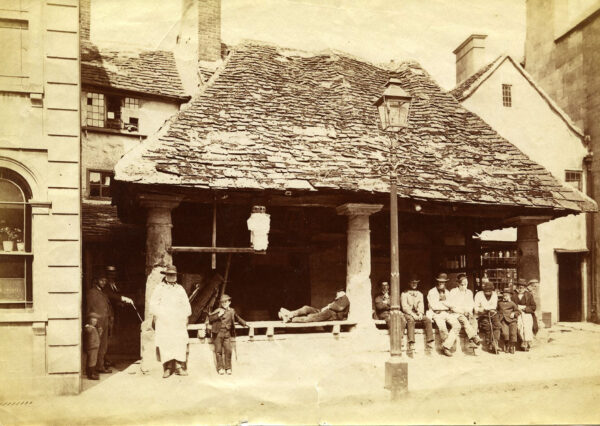
The building, said to have been built in 1570, was once used for the sale of dairy products. It was sited where an Estate Agent stands today.
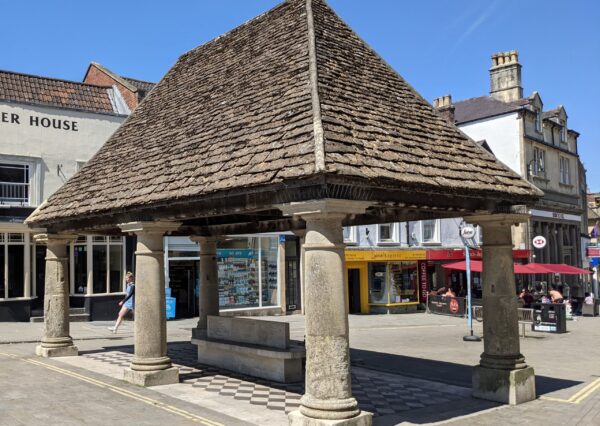
Originally on the site of the Market Cross, a structure used to indicate the market square and centre of trade, the fresh produce was laid out and displayed on the circular stepped bases of the cross. It gradually developed into the 6 pillar, roofed structure you can see today.
The Shambles, a long wooden-roofed open-fronted shed where butchers displayed grew around the Buttercross. When this burned down in 1856 the buttery survived and sold meat.
In 1889 it was sold for a sum of £6 to Mr E C Lowndes, owner of the Manor House in Castle Combe, where it was used as a gazebo in his kitchen garden. It was replaced by a late Victorian building. One hundred years later, the Chippenham Civic Society bought the building for £300 and started on a 6-year campaign to return the building to a prominent position in the Town Centre, near to its original home. The cost of £85,000 needed for the rebuilding of the Buttercross was raised by local donations.
Opened in 1995, it now stands as the centrepiece of the pedestrianised town centre, where a market is still held every Friday and Saturday.
An oak-beamed roof, topped by Cotswold stone slating, rests on 6 stone Doric columns. This covers stone commemorative seating and chequered Portland stone paving.
The stone bench is engraved with the history of the Market Place and the names of those who contributed to its reconstruction.
The War Memorial
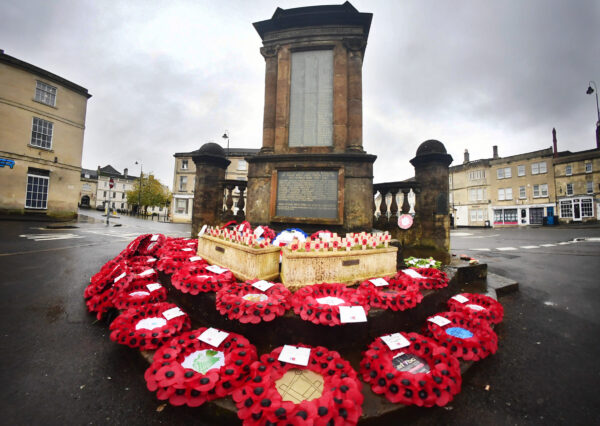
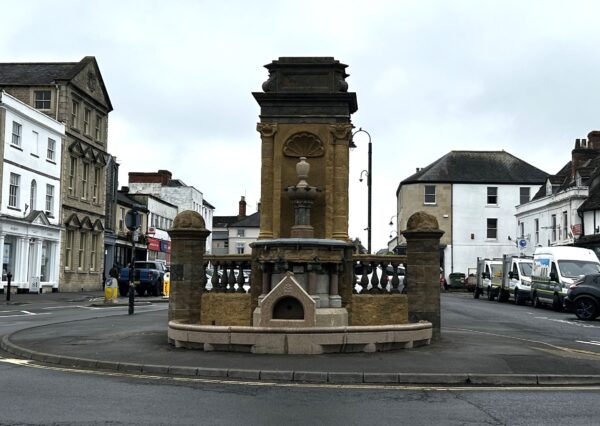
Unveiled on Sunday 4 September 1921, the War Memorial was to be Chippenham’s permanent tribute to those men who had died during the war. Plans for a memorial began on May 6, 1919, when the Town Council proposed that ‘Townspeople be asked to submit any scheme they may have’. Suggestions included a housing scheme, footpath, purchasing Monkton House and Park as a public space but finally, on 18 November 1919, the creation of a permanent monument in the market place was agreed upon.
The architect was Mr G. Parker Pearson from Grittleton, and the builders Messrs J.F Booth & Sons, Banbury. The memorial was constructed in Hornton Stone with a marble basin with two piers, balustrades, renaissance columns, a square plinth, and steps. Originally, a single panel of names were displayed in gold (repainted in 1969). The initial cost of constriction was £836.0s 10d with £723.5s.5p received from public donations.
The War Memorial’s unveiling was attended by many of the town’s population, including the mayor, as well as Field Marshall Lord Methuen. Two ex-servicemen laid wreaths at the monument. One was Pte HA Drummer, who had lost a leg during the war, and whose wreath was in the form of a cross on behalf of all ex-servicemen.


Chippenham Town Council
(opens in a new tab)
7 Likes
Official Chippenham Town Council Facebook
Monitored: Mon-Thu: 9am - 5pm, Fri 9am - 4:30pm
The cast of Beauty and the Beast, the professional pantomime at the Neeld Community & Arts Centre this December, are coming to Chippenham on Friday 23 October.
They will be at the Pumpkin Patch at 10am, and visiting a few more locations during the day. Read more below.

You searched for Beauty and the Beast – The Neeld, Chippenham
bit.ly
The Neeld Community and Arts Centre and Polka Dot Pantomimes presents… Professional pantomime arrives at The Neeld, Chippenham this Christmas as we welcome award winning Polka Dot Pantomimes to pres...
17 hours ago
Trees play an important role in our town, from improving air quality to providing shade and supporting wildlife.
The Arboricultural Officer in the Environmental Services Team explains how recent weather conditions are affecting trees in Chippenham and the measures being taken to strengthen their resilience.
Read the news post here - bit.ly/Trees_Weather
21 hours ago